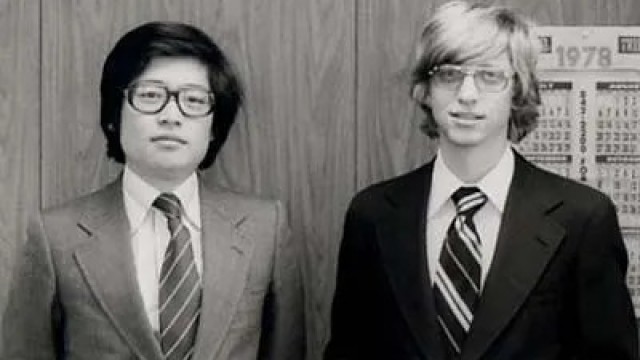
Kazuhiko 'Kay' Nishi
1956  Kobe [Japan]
He is known as the father of MSX computers.
In 1977, he and two friends founded ASCII to publish I/O. He later left the magazine for a more "professional" one, covering electronics and video games: ASCII Magazine.
In August 1977, when they were both 21, he called Bill Gates, and they met in person two months later at a computer fair.
They both shared a passion for computing and realized they had many connections and commonalities.
Nishi became Microsoft's vice president, and his company, ASCII, became Microsoft's official representative in Japan.
The MSX was officially introduced to the press on June 27, 1983. This announcement took many Microsoft employees by surprise. Many were unaware that their company was partnering with the Japanese electronics industry to develop a standard.
In fact, the project had always been a project of the Tokyo-based ASCII-Microsoft subsidiary rather than a true Microsoft project.
For many computer manufacturers in the United States and Europe, the announcement of this alliance was worrying. At one point, at least Zenith, Coleco, and even Atari considered joining the standard, but ultimately, only Spectravideo was the only US-based manufacturer to support the MSX.
Contemporary computing celebrities to Kazuhiko 'Kay' Nishi
-
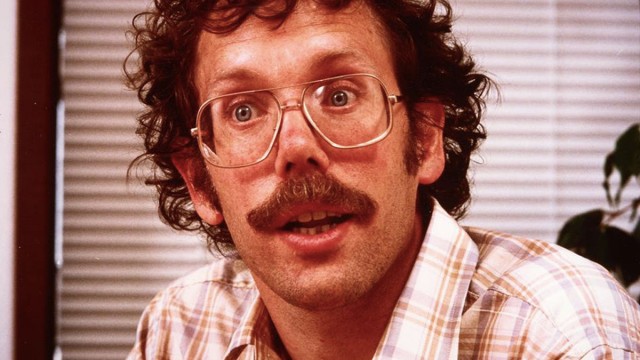 Bill Atkinson
1951 [USA]
† 1951
[USA]
† 1951
He was a prominent employee of Apple Computer, in charge of part of the graphical interface.
-
 Dan Bricklin
1951
Philadelphia [USA]
Dan Bricklin and Bob Frankston are the authors of the famous Visicalc software. The first version of Visicalc was developed for the Apple II; many believe the success of the latter was due to this combination.
-
 Philippe Kahn
1952 Paris [France]
Kahn is one of the four founders of Borland, created in 1983 when young Danish programmer Anders Hejlsberg reached an agreement with Philip Khan to sell the Pascal compiler that Anders had created for personal computers. Turbo Pascal was a compiler with an “environment” concept that was revolutionary at the time.
The company would be acquired by Micro Focus in 2009.
Then came:
Starfish Software, founded in 1994 (acquired by Motorola in 1998), LightSurf Technologies, founded in 1998 (acquired by VeriSign in 2005),
and Fullpower Technologies, founded in 2003. -
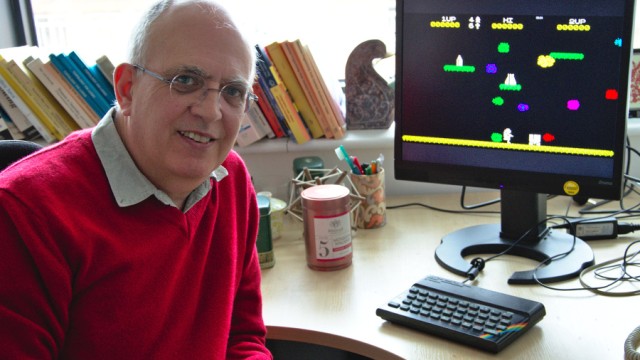 Steve Vickers
1953 [United Kingdom]
He wrote Sinclair BASIC for the ZX80, while working for Nine Tiles, and the ROM firmware and manuals for the Sinclair ZX81 and later the ROM for the Sinclair ZX Spectrum, as well as helping with user documentation, while at Sinclair.
-
 Dave DiOrio
1953
[USA]
† 2018
Designer of the integrated circuits that came with the Commodores.
-
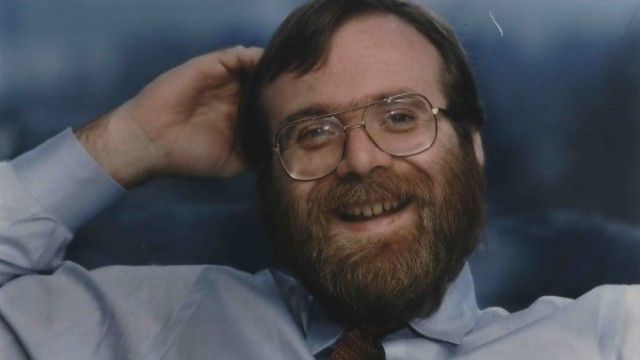 Paul Allen
-
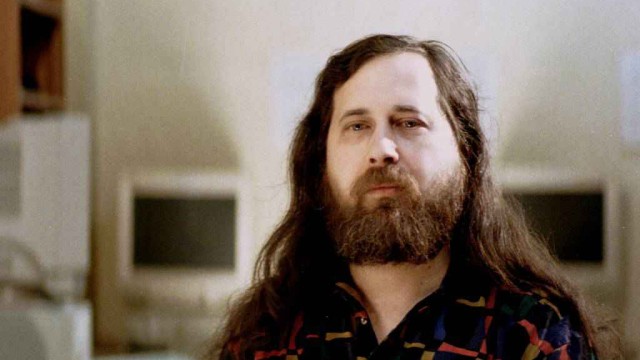 Richard Stallman
1953
New York [USA]
The MIT hacker and founder of the free software movement and the Free Software Foundation.
-
 Andy Hertzfeld
1953
Philadelphia [USA]
After purchasing an Apple II in January 1978, he joined Apple Computer from August 1979 to March 1984, where he was a software designer for the Macintosh system.
-
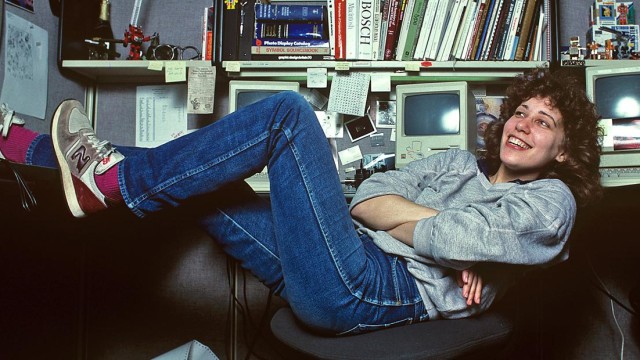 Susan Kare
1954
Ithaca [USA]
She was the graphic designer who created many of the elements of the Apple Macintosh graphical interface in the 1980s.
-
 Michael Sperberg-McQueen
1954
[USA]
C. Michael Sperberg-McQueen is an American markup language specialist. He was co-editor of the Extensible Markup Language (XML) 1.0 spec (1998) and chair of the XML Schema working group.
-
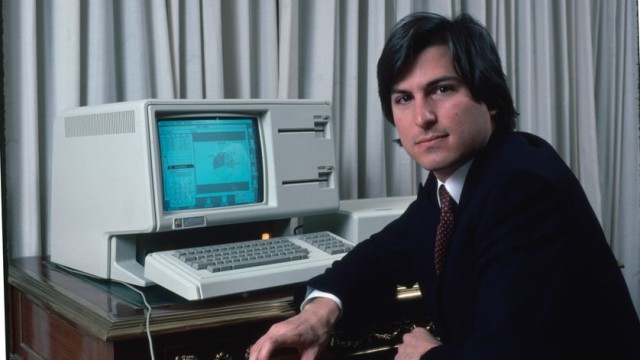 Steve Jobs
1955
San Francisco [USA]
† 2011
Steve Jobs was the co-founder and CEO of Apple, which he founded in 1976 with a childhood friend, Steve Wozniak, and with the help of Jobs's former Atari colleague, Ronald Wayne, in his garage.
-
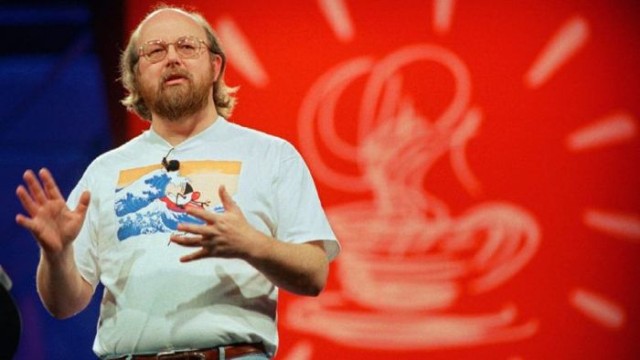 James Gosling
1955 Calgary [Canada]
Father of the Java programming language.
-
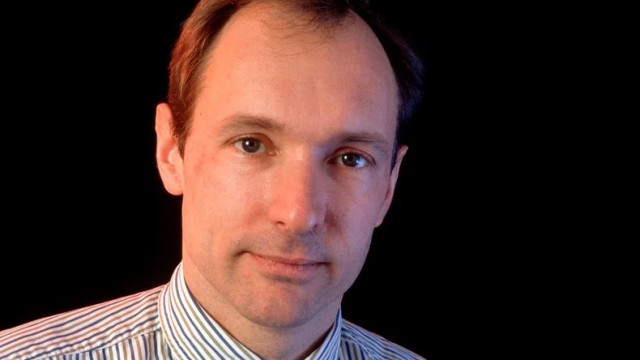 Tim Berners-Lee
-
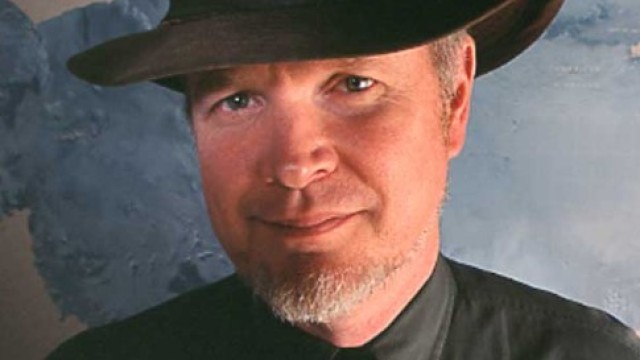 Tim Bray
-
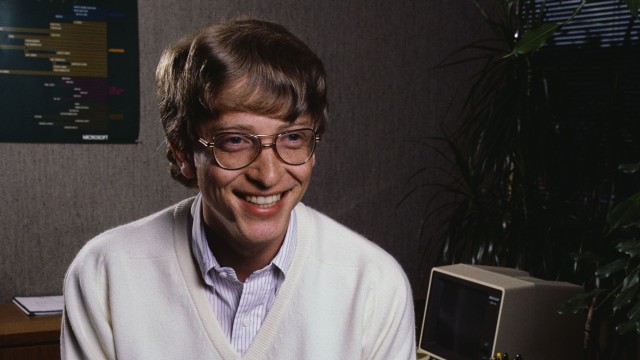 Bill Gates
1955
Seattle [USA]
Bill Gates is a computer industry magnate, founder, along with Paul Allen, of the Microsoft company.
-
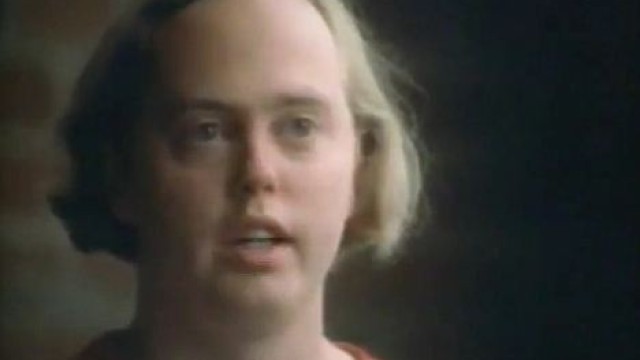 Burrell Smith
1955
[USA]
The hardware engineer who designed the original Macintosh motherboard.
-
 Tim Paterson
1956
[USA]
Tim Paterson was the creator of the QDOS operating system, which was an adaptation of CP/M (at that time the most common operating system for 8-bit computers) to the 8086 chip from Intel, which was acquired by Microsoft to be used as the operating system for the IBM PC with the name PC DOS, and which would later be widely known as MS-DOS. Microsoft also commissioned him to port the system to MSX computers, creating MSX-DOS.
-
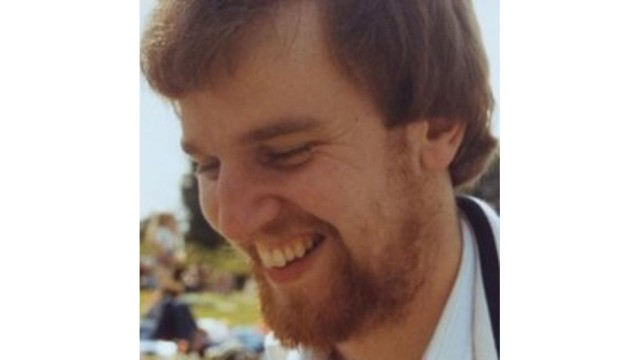 Richard Altwasser
1957
[United Kingdom]
Engineer responsible for the hardware design of the ZX Spectrum.
-
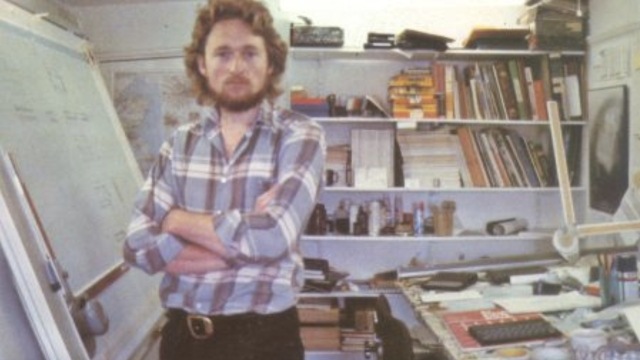 Rick Dickinson
1957
[United Kingdom]
† 2018
Rick Dickinson was the industrial designer working at Sinclair who designed the cases for the ZX80, ZX81 and Sinclair QL, as well as the distinctive rubber keypad for the ZX Spectrum.
-
 Brent Townshend
1960
Toronto [Canada]
The inventor and electrical engineer who created the concept for 56k modems in 1996.
These modems, which operated in the voice frequency band, were capable of download speeds of up to 56,000 bits per second.
Initially, there were two competing modem systems: K56flex and X2.
By the late 1990s, 56k modems were the most popular method of personal Internet access.
The characteristic sounds emitted by these modems were not, as with previous generations, a modulated signal of the data being transferred, but rather the data being transferred.
Communications were beginning to shift from analog to digital. -
 Anders Hejlsberg
1960 Copenhagen [Denmark]
In 1983, while working at Borland, Anders developed Turbo Pascal, a development IDE that integrated a compiler for the Pascal programming language. He later became the principal architect of Delphi. In 1996, he was hired by Microsoft, where he led the development of the J++ programming language. He is credited with creating the C# programming language (C Sharp) and has been the principal architect of the team developing this language since 2000. In 2012, Hejlsberg led the development of TypeScript, Microsoft's open source programming language.
-
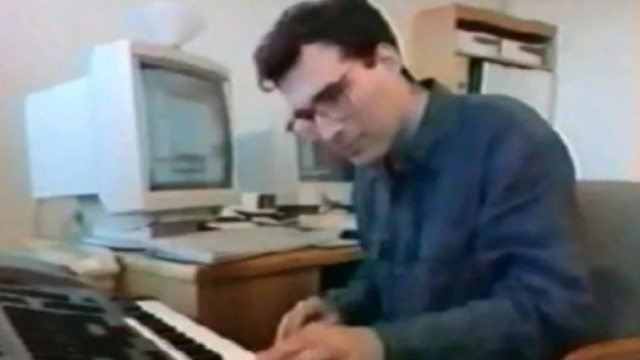 Michael Z. Land
1961
Boston [USA]
Mivchael Land is an American electronic musician and composer known for his compositions for several video games produced by LucasArts.
His first work was for The Secret of Monkey Island, but he wasn't entirely satisfied with the synchronization of the music with the game, and began working on the iMUSE interactive music system, which would be used to create subsequent games in the Monkey Island series and other LucasArts titles.


