History of microprocessors
The appearance of microprocessors, which encapsulated complex integrated circuits inside a microchip, made possible the appearance of personal computers in our homes..
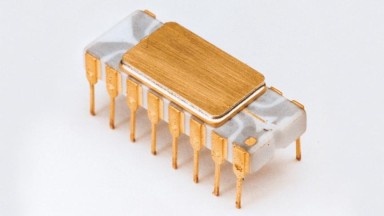 Intel 4004
 Launched: 1971
Bits: 4
Clock: 0.74 MHz
Transistors: 2 300
First commercial chip that included a microprocessor.
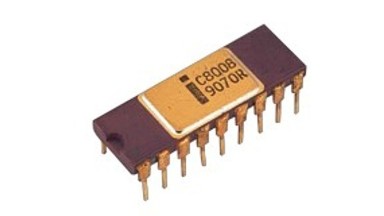
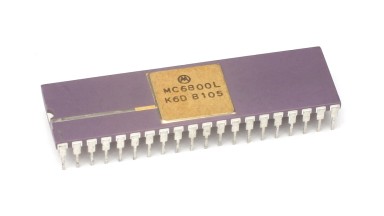
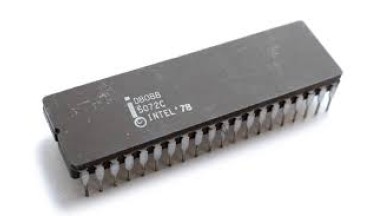
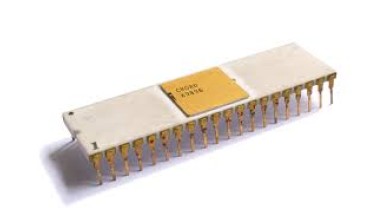 Intel 8080
 Launched: 1974
Bits: 8
Clock: 2 MHz
Transistors: 4 500
It was the microprocessor that equipped the Altair 8800 personal computer, which was published in the North American electronics magazine Popular Electronics.
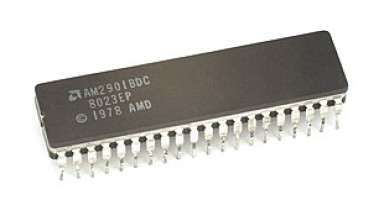
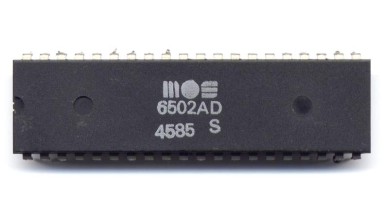 MOS 6502
 Launched: 1975
Bits: 8
It was one-sixth cheaper than its competitors, Intel and Motorola, at the time, and faster.
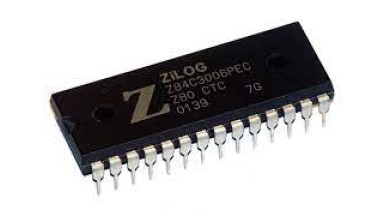
Along with the Z80, they gave rise to the first personal computers.
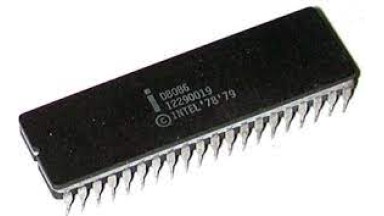 Intel 8086
 Launched: 1978
Bits: 16
Clock: 4.77 MHz
Transistors: 29 000
The first 16-bit microprocessor designed by Intel.
It was the first member of the popular x86 architecture, used to this day.
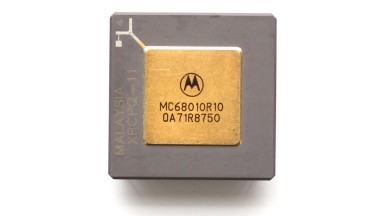
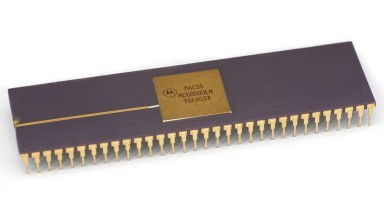 Motorola 68000
 Launched: 1979
Bits: 16
Clock: 2 MHz
Transistors: 68 000
It takes its name from the number of transistors it contains.
It was the first in a family of microprocessors that included the Motorola 68008, Motorola 68010, Motorola 68020, Motorola 68030, Motorola 68040, and Motorola 68060 microchips. It was also known as the 68k.
It powered the popular Commodore Amiga and Atari ST computers, and the first Macintosh computers.
It also powered the Sharp X68000 (sold only in Japan) and the first Capcom arcade video game motherboards.
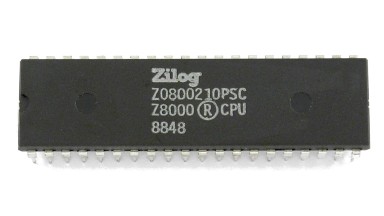 Zilog Z8000
 Launched: 1979
Bits: 16
A 16-bit microprocessor with a completely orthogonal register set, featuring a user mode and a supervisory mode.
Its architecture was designed by Bernard Peuto, while the logic and physical execution were carried out by Masatoshi Shima.
The Z8000 was not compatible with the Z80, so it didn't benefit from a large software package.
However, there was a version of the Xenix operating system for the Z8000.
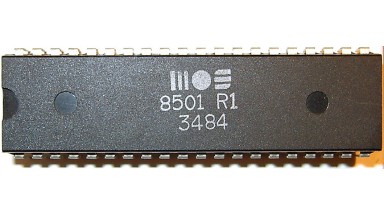
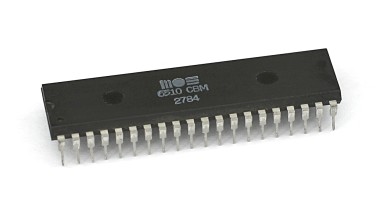 MOS 6510
 Launched: 1982
Bits: 8
The MOS 6510 is the direct successor to the famous 6502.
The main change from the 6502 is the addition of an 8-bit general-purpose I/O port.
It was used as the CPU in the Commodore 64 home computer.
 MOS 7501
 Launched: 1984
Bits: 8
It was a variant of the MOS 6510 introduced in 1984.
It expanded the number of I/O port pins from 6 to 8, but omitted the pins for the non-maskable interrupt and the clock output.
It was used in Commodore's C16, C116, and Plus/4 home computers.
A variant called the MOS 8501 later appeared, with improved manufacturing technology that allowed for higher clock speeds.
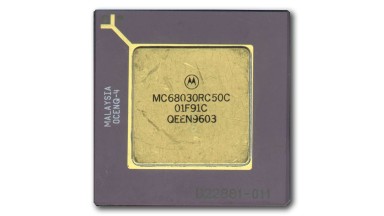 Motorola 68030
 Launched: 1987
Bits: 32
Clock: 16 MHz
Transistors: 273 000
The 68030 is similar to the 68020 but includes an on-chip cache.
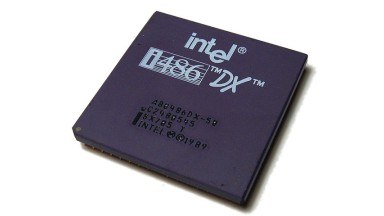
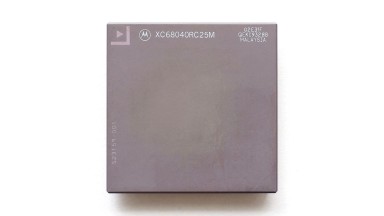
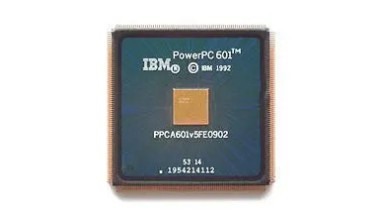
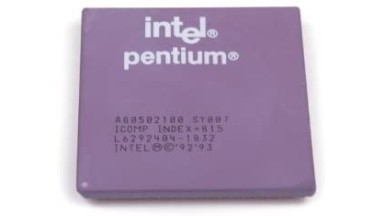 Pentium
 Launched: 1993
Bits: 32
Clock: 60 MHz
Transistors: 3 100 000
The Pentium microprocessor had an architecture capable of executing two operations at once.
The Pentium's introduction was intended to eliminate competitors producing clone microprocessors, such as AMD (Advanced Micro Devices), which created the K5, or Cyrix, which produced very good 486s.
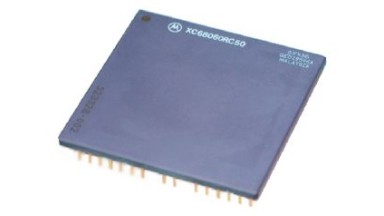 Motorola 68060
 Launched: 1994
Bits: 32
Clock: 50 MHz
Transistors: 2 500 000
The Motorola 68060 was the last of the 68k family. It was two to three times more powerful than its predecessor, the 68040, and featured an integrated floating-point unit (FPU) and memory management unit (MMU).
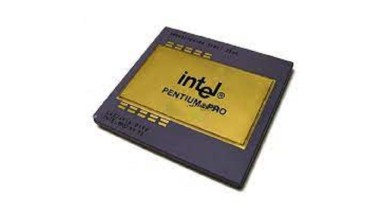 Pentium Pro
 Launched: 1995
Bits: 32
Clock: 150 MHz
Transistors: 5 500 000
An evolution of the Pentium, but with RISC architecture.
It was very inexpensive, but suffered from a problem with floating-point calculations, which was called flag erratum. It was soon discontinued.
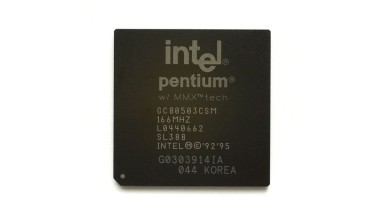 Pentium MMX
 Launched: 1996
Bits: 32
Clock: 120 MHz
Transistors: 4 500 000
It included a set of instructions developed by Intel intended to improve processor performance in multimedia applications.
AMD, Intel's main competitor, would implement the 3DNow! floating-point instruction set.
 Intel Core 2
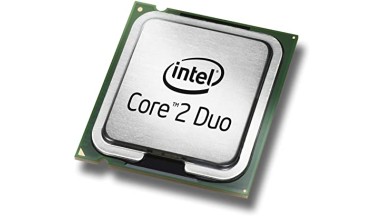
 Launched: 2006
Bits: 64
Clock: 1060 MHz
Transistors: 151 000 000
It covers the Solo (single core), Duo (dual core), Quad (quad core), and Extreme lines.
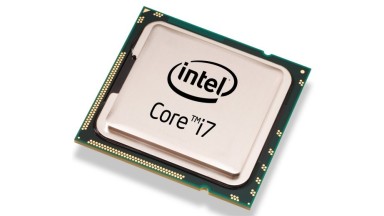 Intel Core i7
 Launched: 2008
Bits: 64
Clock: 2660 MHz
Transistors: 731 000 000
The Core i7 is the first processor to use Intel's Nehalem microarchitecture and is the successor to the Intel Core 2 family.
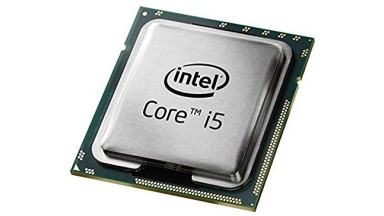 Intel Core i5
 Launched: 2009
Bits: 64
Clock: 2660 MHz
Transistors: 774 000 000
Core i5 is a term used to designate mid-range or high-midrange processors from Intel. They are characterized by an affordable price and sufficient performance to be used in computers capable of running complex programs or games that require slightly more power.
The i5 family offers an average processing speed of around 3.5 GHz and a cache of around 8 MB.