History of Intel microprocessors
Intel is the world's largest chip manufacturer.
It is the inventor of the x86 series of microprocessors, which are found in most IBM-PC compatible personal computers.
The company was founded in Mountain View, California, in 1968 by Gordon Moore (a chemist and physicist, famous for his “Moore's Law”) and Robert Noyce (a physicist and co-inventor of the integrated circuit) when they left Fairchild Semiconductor. Intel's third employee was Andy Grove, a chemical engineer who ran the company for most of the 1980s and the high-growth period of the 1990s.
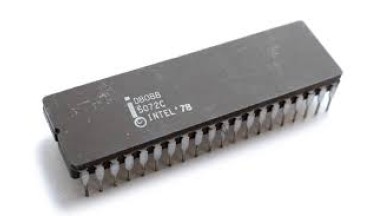
In 1981, Intel developed the Intel 8086 and 8088 processors (16-bit and 8-bit data bus, both with the same instruction set), which racked up a whopping 2,500 design awards in a single year.
IBM selected the 8088 for its IBM PC (using an external manufacturer for the first time), which created the huge market for IBM PC compatibles.
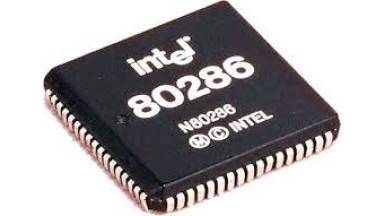
In 1982, the revolutionary Intel 80286 appeared, equipped with 134,000 transistors and the first to offer software compatibility with its predecessors.
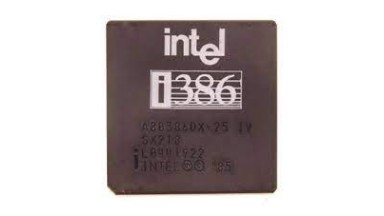
In 1985, the Intel 80386 arrived, a 32-bit microprocessor with 275,000 transistors that was quickly adopted by Compaq for its Compaq Deskpro 386 personal computer.
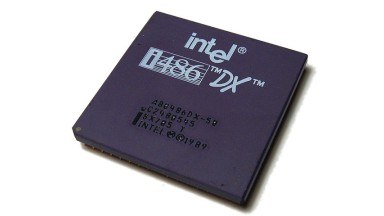
Four years later, the robust Intel 80486 with 1.2 million transistors would arrive.
In 1993, Intel began developing the Pentium line, full of new standards and transistors, and with five times the capacity of the 486. Next came the Pentium Pro, and in 1997, MMX technology was included in its processors.
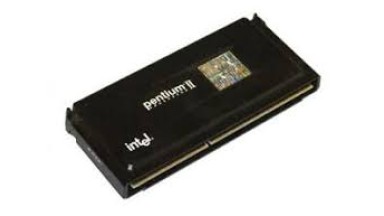
In May 1997, the Intel Pentium II appeared, followed a year later by the Pentium II Xeon.
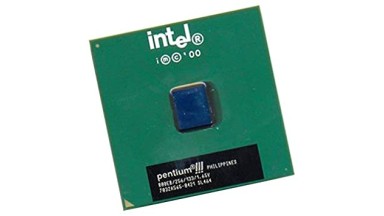
This was followed by the Intel Pentium III.
Intel's main competitor in the x86 market is AMD (Advanced Micro Devices), a company with which Intel had technology sharing agreements and also cross-litigation.
The other historic competitor in the x86 market was Cyrix.
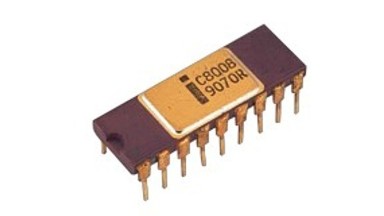
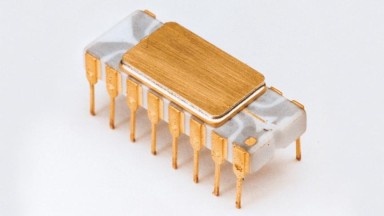 Intel 4004
 Launched: 1971
Bits: 4
Clock: 0.74 MHz
Transistors: 2 300
First commercial chip that included a microprocessor.
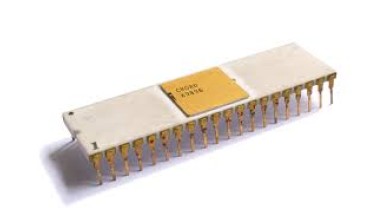 Intel 8080
 Launched: 1974
Bits: 8
Clock: 2 MHz
Transistors: 4 500
It was the microprocessor that equipped the Altair 8800 personal computer, which was published in the North American electronics magazine Popular Electronics.
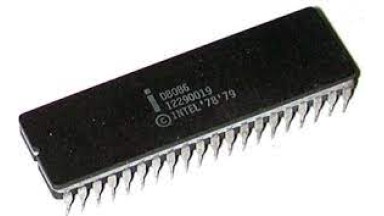 Intel 8086
 Launched: 1978
Bits: 16
Clock: 4.77 MHz
Transistors: 29 000
The first 16-bit microprocessor designed by Intel.
It was the first member of the popular x86 architecture, used to this day.
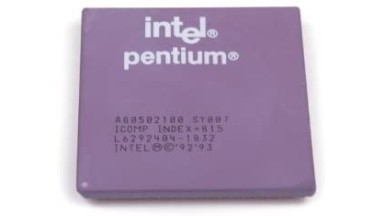 Pentium
 Launched: 1993
Bits: 32
Clock: 60 MHz
Transistors: 3 100 000
The Pentium microprocessor had an architecture capable of executing two operations at once.
The Pentium's introduction was intended to eliminate competitors producing clone microprocessors, such as AMD (Advanced Micro Devices), which created the K5, or Cyrix, which produced very good 486s.
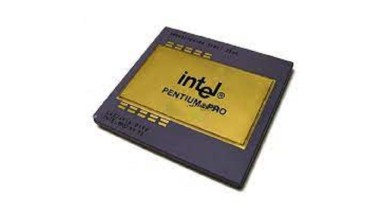 Pentium Pro
 Launched: 1995
Bits: 32
Clock: 150 MHz
Transistors: 5 500 000
An evolution of the Pentium, but with RISC architecture.
It was very inexpensive, but suffered from a problem with floating-point calculations, which was called flag erratum. It was soon discontinued.
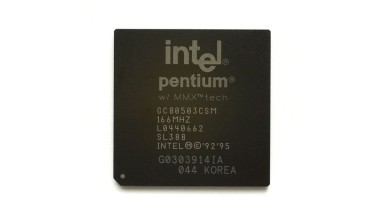 Pentium MMX
 Launched: 1996
Bits: 32
Clock: 120 MHz
Transistors: 4 500 000
It included a set of instructions developed by Intel intended to improve processor performance in multimedia applications.
AMD, Intel's main competitor, would implement the 3DNow! floating-point instruction set.
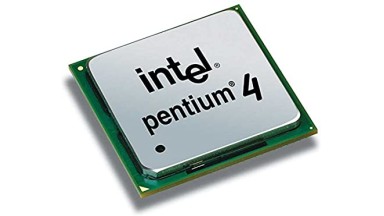
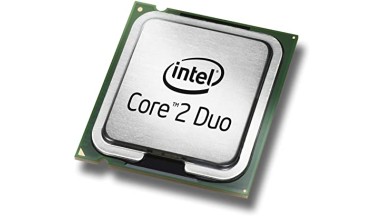 Intel Core 2
 Launched: 2006
Bits: 64
Clock: 1060 MHz
Transistors: 151 000 000
It covers the Solo (single core), Duo (dual core), Quad (quad core), and Extreme lines.
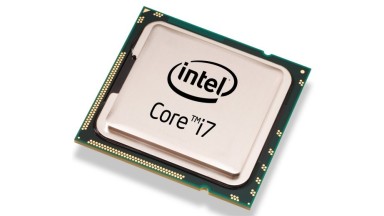 Intel Core i7
 Launched: 2008
Bits: 64
Clock: 2660 MHz
Transistors: 731 000 000
The Core i7 is the first processor to use Intel's Nehalem microarchitecture and is the successor to the Intel Core 2 family.
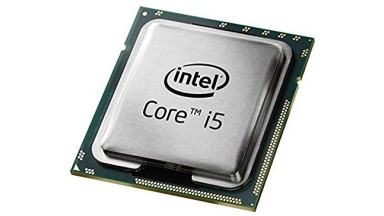 Intel Core i5
 Launched: 2009
Bits: 64
Clock: 2660 MHz
Transistors: 774 000 000
Core i5 is a term used to designate mid-range or high-midrange processors from Intel. They are characterized by an affordable price and sufficient performance to be used in computers capable of running complex programs or games that require slightly more power.
The i5 family offers an average processing speed of around 3.5 GHz and a cache of around 8 MB.