Personal Computer peripherals
Since the explosion of the first 8-bit personal computers, many companies have been producing and marketing all sorts of peripherals to complement the functionality of these computers.
Some notable historical peripheral and component brands
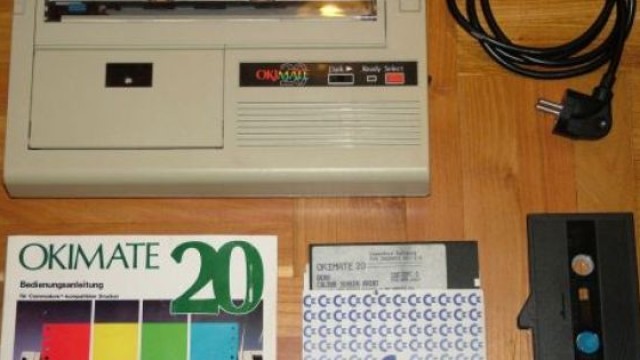 Oki
Oki  Japan
Japan Since: 1881
Oki is a major Japanese manufacturer whose products include fax machines, computer printers with black and white and color laser technology (laser with LED technology), dot matrix printers, and consumer electronics products.
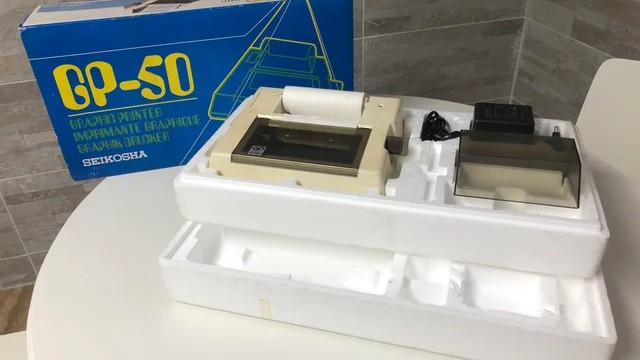 Seikosha Japan (Tokio)
 Since: 1892
Until: 1996
A subsidiary of the Japanese watch brand SEIKO.
Founded in 1892 in Tokyo as a watch manufacturing company, it later went on to manufacture dot-matrix printers.
 Star Japan (Shizuoka)
 Since: 1947
The electronics manufacturer Star Micronics became famous for its dot matrix printers.
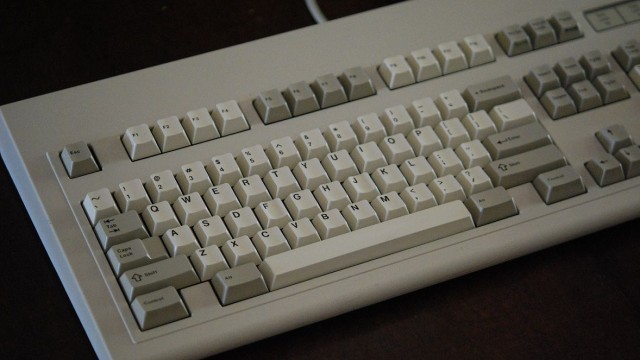 Cherry
 In:
 Estados Unidos (Highland Park)
Headquarters:
 Germany (Auerbach in der Oberpfalz)
 Since: 1953
Cherry is a German manufacturer of computer peripherals.
 DEC (Digital Equipment Corporation)
 Headquarters:
USA (Maynard) Since: 1957
Until: 1998
DEC was an American company considered a pioneer in the manufacture of minicomputers.
 Epson Japan (Suwa)
 Since: 1961
In 1975, Epson became its own company as the printer manufacturing branch of Seiko, previously marketed under the Seikosha brand.
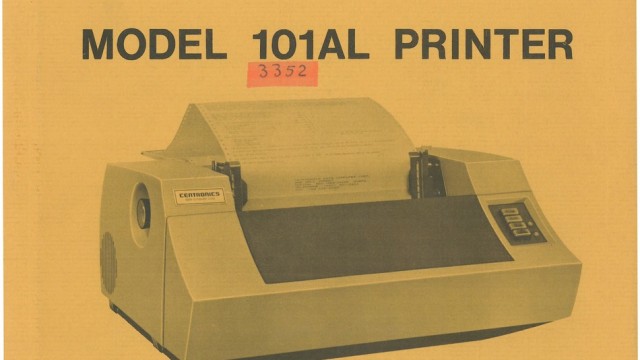 Centronics
 Headquarters:
USA (Hudson) Since: 1971
Until: 1987
Centronics Data Computer Corporation was a pioneering American company, a major manufacturer of computer printers in the 1970s.
Today, it is best remembered for the parallel interface that bears its name.
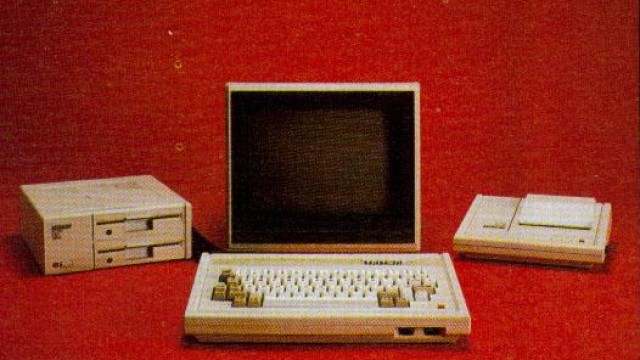 Radofin
  United Kingdom (Londres)
 Since: 1974
Until: 1991
Radofin Electronics, Ltd., commonly known as Radofin, was a multinational electronics company founded in July 1974.
Three headquarters were established: Radofin Electronics in London, Radofin Electronics in Liechtenstein, and Radofin Electronics (Far East) in Hong Kong. Initially, the company was engaged in the manufacture and sale of calculators, taking advantage of the growing demand for consumer electronics at that time.
It later went on to manufacture its own consoles and storage systems for 8-bit computers.
Noteworthy is the Dragon MSX (1985), designed by Radofin for Eurohard, owners of Dragon Data. Although it was never released to the public due to Eurohard's bankruptcy, several hundred units were produced and given to employees as part of their final salaries.
 Ashton-Tate
 Headquarters:
USA (Torrance) Since: 1980
Until: 1991
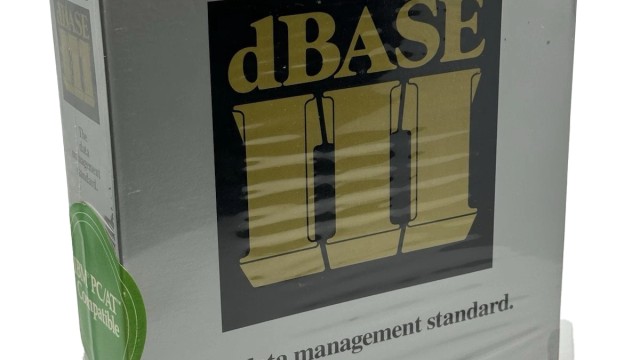
Ashton-Tate was a US software company famous for developing the dBase database application and the Framework office suite.
Designed by Wayne Ratliff, dBase was a database manager that, at one point, held a monopoly in its market.
Framework, designed by Robert Carr, was office suite that combined the functions of a word processor, spreadsheet, graphics manager, file manager, and communication software that brought together several terminal emulators. A macro language called FRED (for FRamework EDitor) completed the package.
Ashton-Tate grew from a small garage company into a multinational corporation with software development centers throughout the United States and Europe. It became one of the “Big Three” software companies, alongside Microsoft and Lotus.
After the death (from a heart attack) of George Tate, Ashton-Tate was sold to Borland in 1991.
 QuickShot
 Headquarters:
USA Since: 1981
Until: 1988
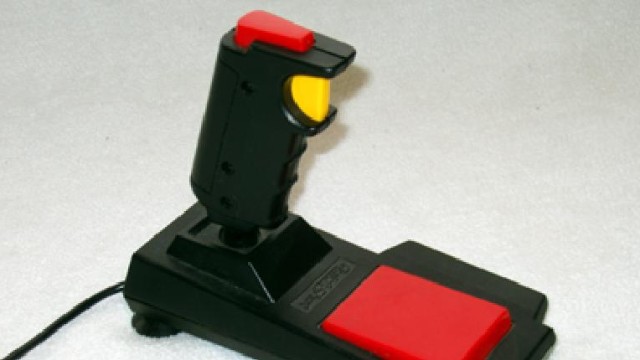
QuickShot was a well-known family of joysticks manufactured from 1982 by the company Spactravideo for 8-bit personal computers (Commodore, Spectrum, Atari, MSX...)
 Logitech
 Headquarters:
 Switzerland (Lausanne)
 Since: 1981
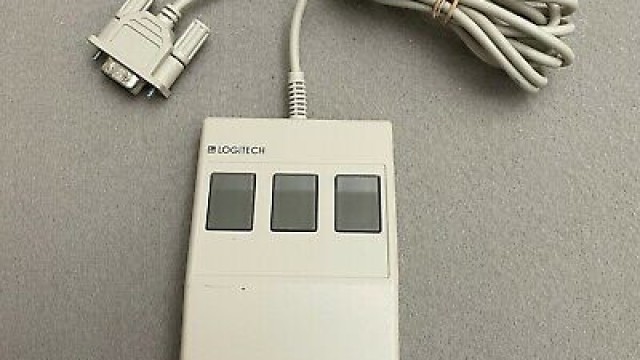
Logitech is a Swiss electronics company that manufactures peripherals for personal computers, primarily mice, keyboards, speakers, and headphones.
 MHT
MHT  Spain
Spain Since: 1981
Until: 1995
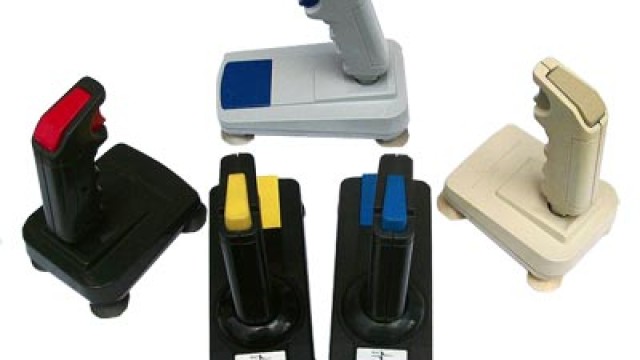
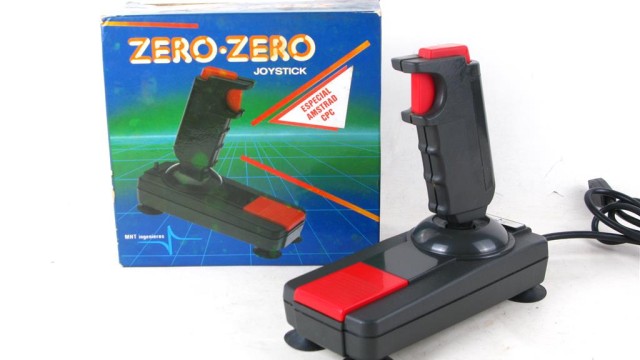
MHT Ingenieros S.L. was a company that manufactured peripherals for 8-bit Commodore, Amstrad, and Spectrum computers.
Their joysticks, which they called Zero-Zero, are well-known.
 Advanced Gravis Computer Technology
  Canada
 Since: 1982
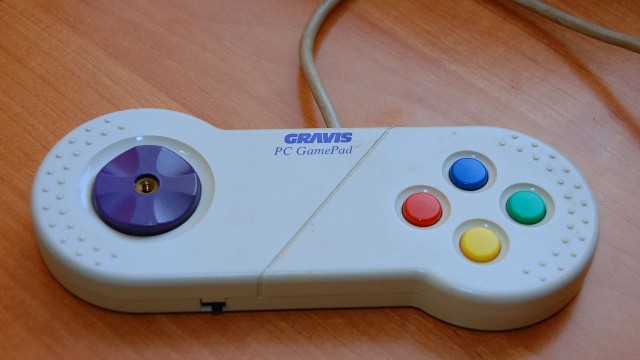
Gravis was a manufacturer of computer hardware and peripherals, best known for its Gravis Ultrasound sound card (a competitor to the Sound Blaster). It also manufactured joysticks and gamepads.
 Number Nine
 Headquarters:
USA Since: 1982
Until: 1999
Number Nine Visual Technology Corporation was a renowned manufacturer of video chips and graphics cards from 1982 to 1999.
This company developed the first 128-bit graphics processor (the Imagine 128), as well as the first 256-color (8-bit) and 16.8 million-color (24-bit) graphics cards.
 Kempston Micro Electronics United Kingdom (Kempston)
 Since: 1983
Until: 1993
British company dedicated to the manufacture of joysticks and other peripherals for 8-bit computers.
 Genius
  Taiwan (Taipéi)
 Since: 1983
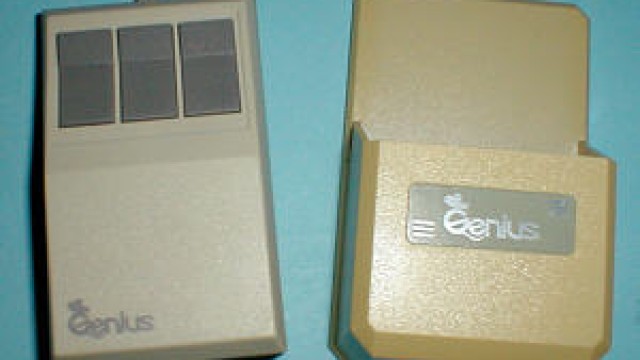
Genius manufactures computer peripherals such as keyboards, mice, trackballs and pointing devices, joysticks, TV and video tuners, webcams, security cameras, speakers, headsets, headphones, and other gaming peripherals.
 Borland
 Headquarters:
USA (Austin) Since: 1983
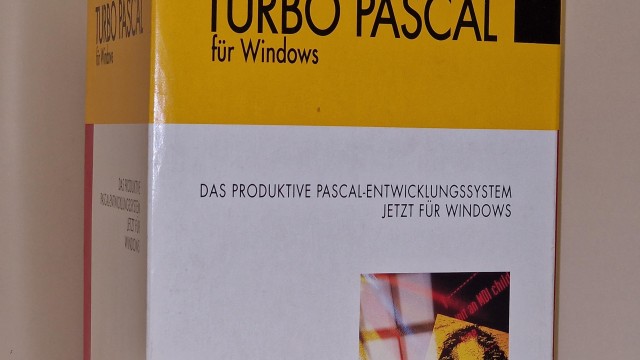
Borland was founded in 1983 when a young Dane named Anders Hejlsberg reached an agreement with Philip Khan to sell the Pascal compiler that Anders had created for personal computers. Turbo Pascal was a compiler with an “environment” concept that was revolutionary at the time.
Borland later released compilers for other languages such as Prolog (Turbo Prolog) and Basic (Turbo BASIC). But the most popular and successful was the C programming language, Turbo C.
Borland rose to the top of the compiler market, competing with Microsoft.
But it lost that position before Windows 95 came out. The Windows version of Turbo Pascal was considered a good product. But programming for Windows cried out for a more comfortable environment. Meanwhile, Microsoft was taking over the market with Visual Basic. By the time Delphi was released in the spring of 1995, it had already lost a lot of ground.
Just as Delphi emerged as the evolution of Turbo Pascal for MS Windows, so did Turbo C give rise to C++Builder.
The company also launched JBuilder, a Java IDE (1996).
Company evolution:
In 1991, Borland acquired Ashton-Tate, continuing to market its flagship products, dBase and Interbase.
Around 1993-94, agreements were reached with WordPerfect for cooperation in office automation, with their products being marketed jointly.
Following the purchase of Visigenic (a company specializing in CORBA and creator of VisiBroker) in 1997, it changed its name to Inprise.
In 1999, Microsoft invested in the company, two months after causing the departure of Inprise's top executives.
In 2000, there was a failed attempt to merge with Corel.
In 2001, Inprise reverted to its famous name, becoming Borland Software Corporation.
On November 14, 2006, the IDEs and compilers department (Borland Developer Tools Group) separated from Borland to form a new subsidiary (whose sole shareholder was Borland) called CodeGear. The parent company, Borland Software Corporation, will focus on analysis, design, and application lifecycle management (ALM) tools.
In May 2008, Borland Software Corporation reached an agreement to sell CodeGear to Embarcadero Technologies for $23 million.
On May 6, 2009, software developer Micro Focus purchased Borland Software Corporation for $75 million.
United Kingdom (High Wycombe) Since: 1984
Until: 1989
Rotronics Ltd., a Rovo Financial Corporation Ltd. division based in High Wycombe, manufactured the Rotronics Wafadrive in 1984.
This peripheral for the Sinclair ZX Spectrum home computer was launched in late 1984 as a competitor to Sinclair's ZX Interface and ZX Microdrive. The Wafadrive featured two built-in continuous loop "stringy floppy" tape drives manufactured by BSR, an RS-232 interface, and a Centronics parallel port.
Despite its innovative features, the Rotronics Wafadrive faced several challenges. It required high memory usage, with the operating system reserving about 2K of the Spectrum's memory.
The device also suffered from slow performance compared to microdrives, compatibility issues, and unreliable storage media. Users encountered difficulties, and sales were poor, ultimately outweighing the peripheral's advantages.
As a result of these issues, Rotronics Ltd. was liquidated by 1989, marking the end of Wafadrive's short-lived presence in the market.
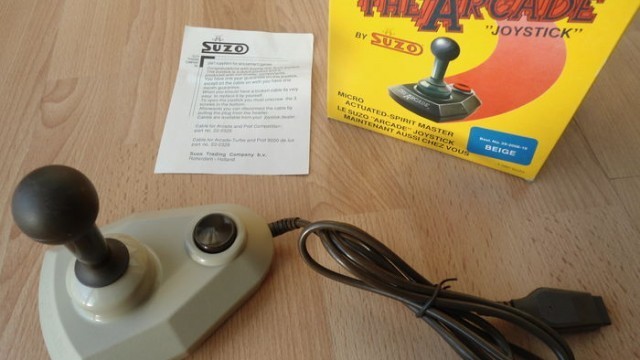 Suzo
Suzo  Netherlands (Rotterdam)
 Since: 1985
The brand that provided the experience of an arcade joystick in our home.
 Ariston Spain (Barcelona)
 Since: 1988
Ariston Electrónica S.A. is a company dedicated to the electronics sector, which imported and distributed joysticks for 8-bit computers.
 GunShot
Since: 1990 aprox.
This well-known brand of Atari-standard joysticks made products that became very popular, such as the GS123 model.
It was distributed in the UK by Vulcan Electronics and also by Tigress. It was also distributed in the US by C&L.
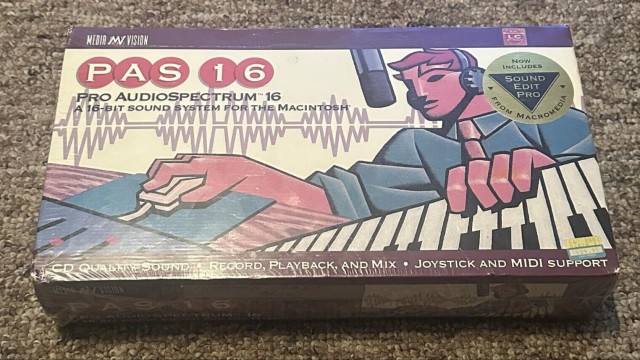 Media Vision
 Headquarters:
USA (Fremont) Since: 1990
Until: 1995
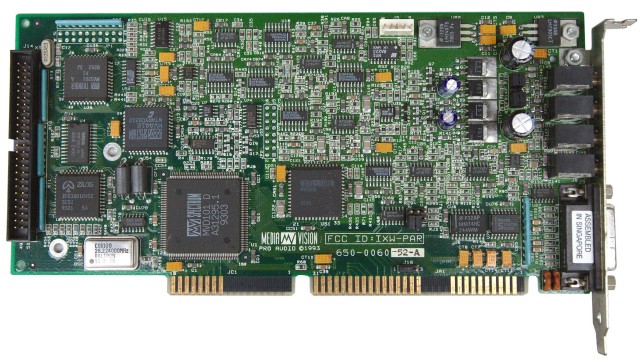
Media Vision was widely known for its Pro AudioSpectrum PC sound cards, which it often bundled with CD-ROM drives.
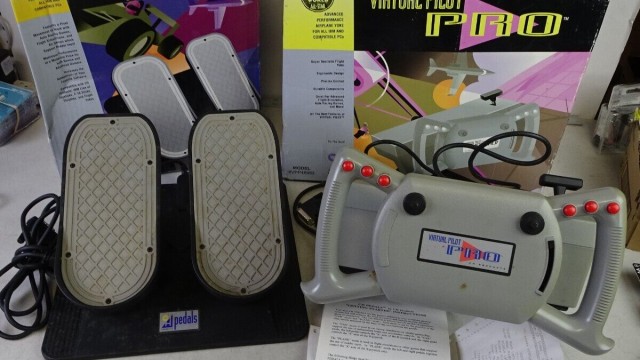 CH Products USA (Vista)
 Since: 1994 aprox.
CH Products is a veteran manufacturer of both professional and recreational controllers.
In 1997, CH Products manufactured the first force-feedback gaming joystick under license from the technology's creator, Immersion Corporation.
Some historical personal computer peripherals
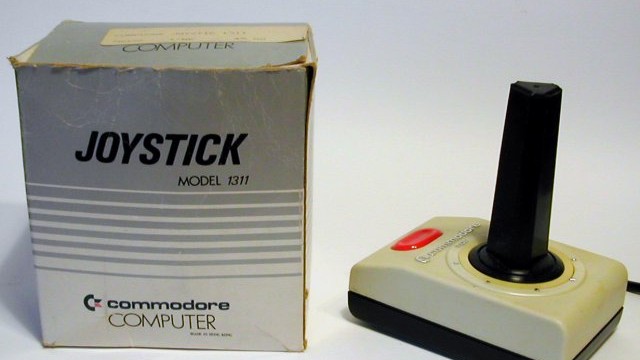 Commodore 1311
Commodore
Commodore 1311
Commodore
The 1311 is a digital joystick for the VIC 20, C64, C128, and Amiga manufactured by Commodore.
This joystick has contact switches.
 Seikosha SP-180
Seikosha
Seikosha SP-180
Seikosha
9-pin dot matrix printer with support for NLQ (Near Letter Quality) mode, achieving results comparable to 24-pin printers.
Manufactured by a subsidiary of the Japanese brand SEIKO.
 Seikosha GP-50
Seikosha
Seikosha GP-50
Seikosha
5-inch continuous-print dot matrix printer.
The Seikosha GP-50S model, instead of a parallel port, has a bus connector for Sinclair Research computers: the Sinclair ZX80, Sinclair ZX81, and Sinclair ZX Spectrum.
The Seikosha GP-50MX model came with a parallel port interface and was compatible with MSX computers.


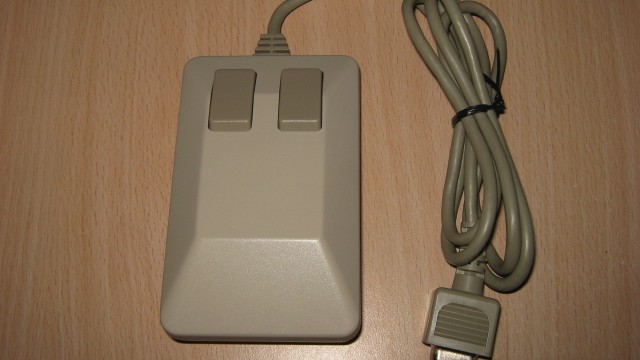 Commodore 1351
Commodore
Commodore 1351
Commodore
The 1351 is a mouse for the C64 and C128 manufactured by Commodore.
This mouse has a trackball and encoder wheels to read movement and has two buttons. Special software is required to use this mouse.
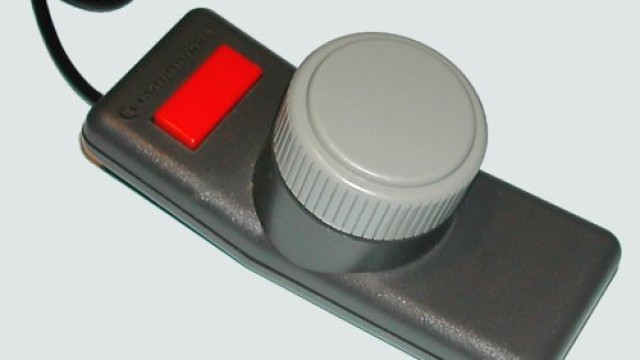 Commodore 1312
Commodore
Commodore 1312
Commodore
The 1312 is an analog paddle for the VIC 20, C64, and C128 manufactured by Commodore.
This paddle has adjustable resistance and a contact switch. The paddles connect as a set of two.
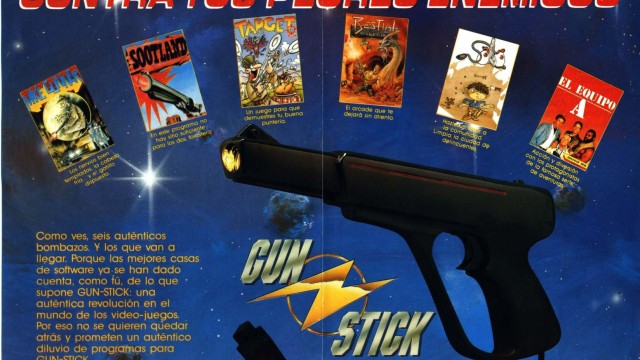 Gun-Stick
MHT
Gun-Stick
MHT
A gun that works with a photosensor, which, through a lens, allows you to know whether you are aiming at a lit or dark area of the screen and transmits this information through the joystick port.
Available for Commodore, Spectrum, Amstrad, MSX, and PC.
It was incorporated by the leading software developers of the time, with innovative games such as clay pigeon shooting (Dinamic), The A-Team (Sapphire), and William Tell (Opera Soft), among others.
 Centronics Model 101
Centronics
Centronics Model 101
Centronics The Centronics Model 101 was introduced at the 1970 National Computer Conference. The print head used an innovative seven-pin solenoid impact system. Based on this design, Centronics later claimed to have developed the first dot matrix printer.


 EPSON TX-80
Epson
EPSON TX-80
Epson In June 1978, the TX-80 80-column dot matrix printer was introduced, primarily used as a system printer for the Commodre PET computer. After two years of further development, an improved model, the MX-80, was released in October 1980, becoming the best-selling printer in the United States.


 Apple Silentype
Apple
Apple Silentype
Apple
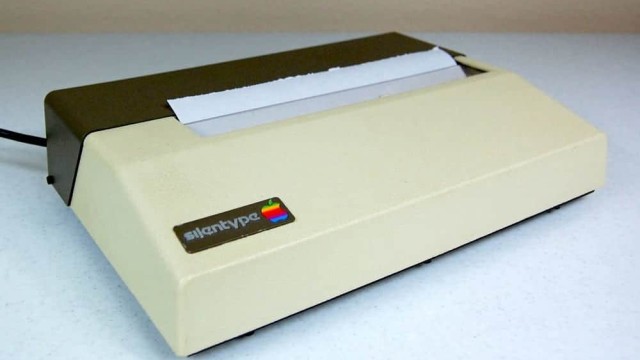
The first printer produced by Apple.
It was a small, quiet, 80-column thermal printer designed for the Apple II Plus and Apple III.

 ZX Printer
Sinclair
ZX Printer
Sinclair Thermal printer on metallized paper manufactured by Sinclair Research for its Sinclair ZX81 home computer.


 Rotronics Wafadrive
Rotronics
Rotronics Wafadrive
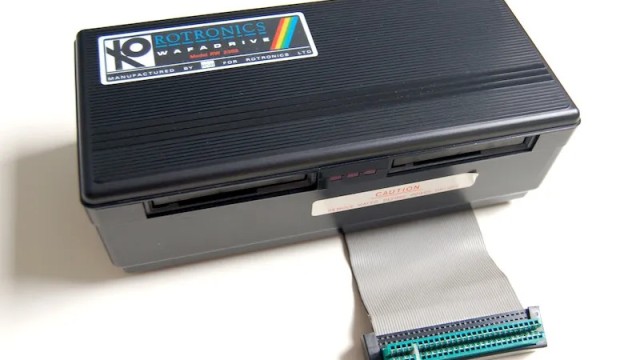
Rotronics The Rotronics Wafadrive, released in late 1984, was a magnetic tape storage peripheral designed for use with the Sinclair ZX Spectrum home computer and intended to compete with the ZX Interface 1 and ZX Microdrive produced by Sinclair itself.

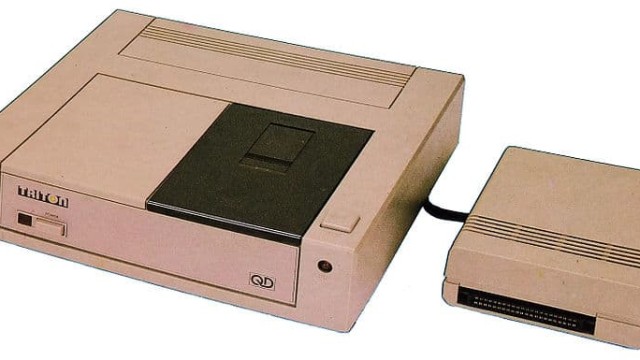 Triton Quick Disk
Radofin
Triton Quick Disk
Radofin Triton Quick Disk Drive is an external floppy disk drive, with integrated power supply, for Quick Disk diskettes designed by Radofin and marketed both by the brand itself and under third-party brands.
 Commodore MPS-803
Commodore
Commodore MPS-803
Commodore Commodore's seven-pin dot matrix printer of the MPS series, which used continuous paper.

 Epson LX-90
Epson
Epson LX-90
Epson This printer was quite similar to the LX-80, but required a specific emulation interface to be connected to each of the different computers: Commodore 64, Atari XE/XL, IBM PC, IBM PCjr and Apple IIc.
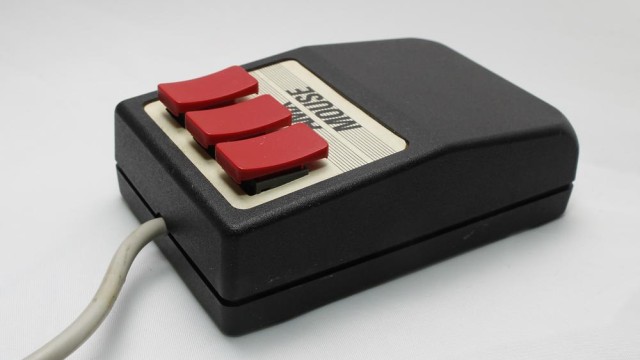 AMX Mouse
The AMX Mouse was a 3-button computer mouse marketed by the British company Advanced Memory Systems beginning in 1985.
Versions with interfaces for the ZX Spectrum, Amstrad CPC, and BBC Micro were released.

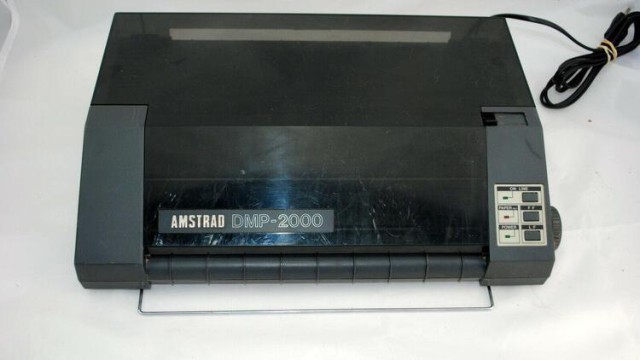


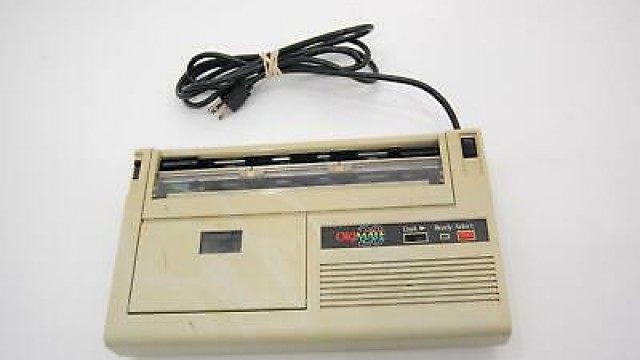
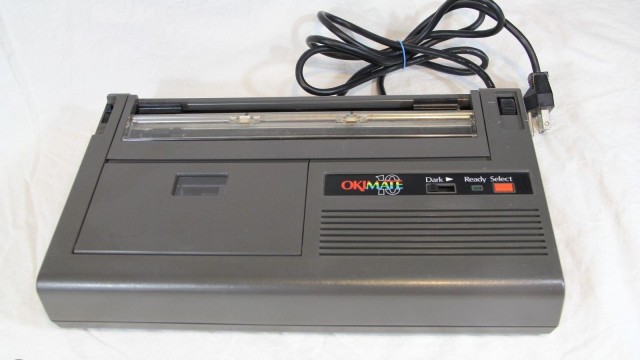 Okimate 10
Oki
Okimate 10
Oki It had a "plug 'n print" interface with modules for Commodore, Atari, IBM PC, and Apple computers.
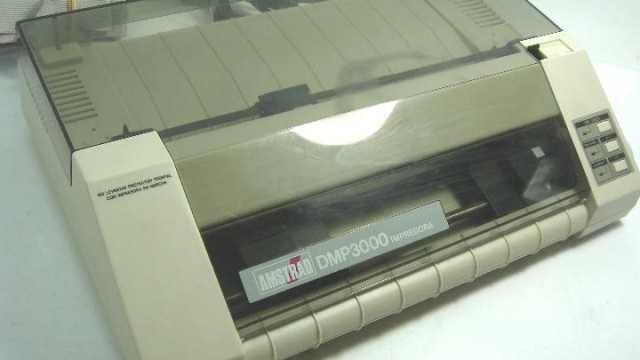 Amstrad DMP3000
Amstrad
Amstrad DMP3000
Amstrad 9-pin printer that became very popular when sold as a set with the Amstrad PC1512 and Amstrad PC1640.




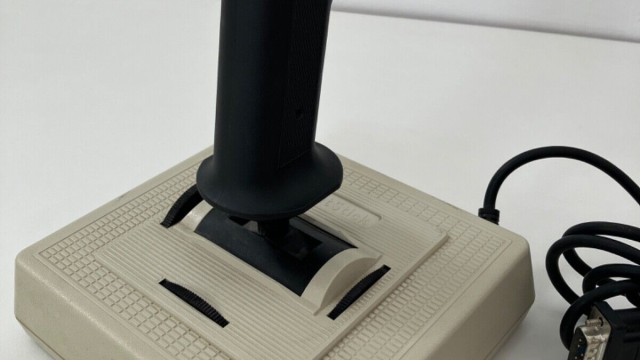 FlightStick
CH Products
FlightStick
CH Products FlightStick is a stick-oriented joystick for flight simulators, with versions for PC and Mac.
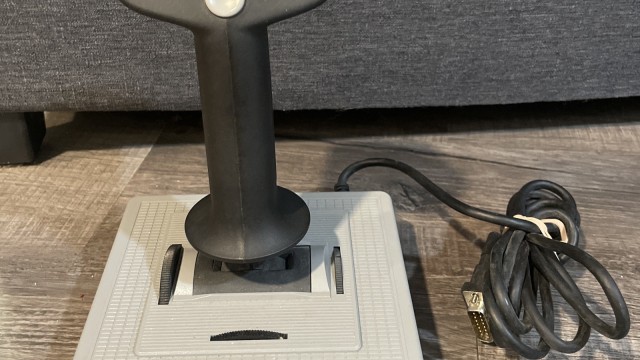 FlightStick Pro
CH Products
FlightStick Pro
CH Products FlightStick Pro is an evolution of the FlightStick stick-oriented joystick for flight simulators.
Virtual Pilot Pro
CH Products Virtual Pilot Pro is a flight simulator controller that was highly appreciated in its time.


