History of Zilog microprocessors
Zilog was founded in California in 1974 by Federico Faggin and Ralph Ungermann, who had worked at Intel as chief designer of the Intel 4004 microprocessor and later the Intel 8080. Masatoshi Shima, who also worked with Faggin on the 4004 and 8080, joined Zilog in 1975.
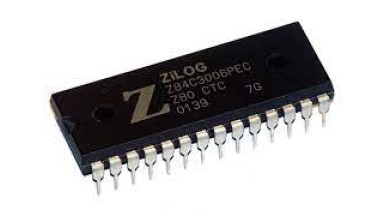
In 1976, the company created the Zilog Z80 (a microprocessor built using NMOS technology) based on the Intel 8080. It is basically an extension of the latter, supporting all of its instructions.
A year later, the first computer using the Z80 was released, the Tandy TRS-80 Model 1 with a 1.77 MHz Z80 and 4 KB of RAM.
It would eventually displace the 8080 from the market due to its lower price and higher performance. The computer market ended up being divided almost equally between the Z80 and the MOS 6502.
Ungermann had a falling out with Faggin and left Zilog in 1978.
After the Z80, Zilog introduced several 16-bit and 32-bit processors, but without much success.
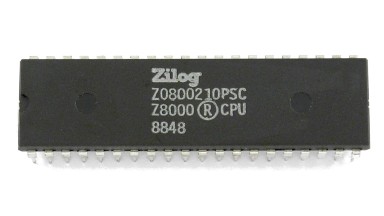 Zilog Z8000
 Launched: 1979
Bits: 16
A 16-bit microprocessor with a completely orthogonal register set, featuring a user mode and a supervisory mode.
Its architecture was designed by Bernard Peuto, while the logic and physical execution were carried out by Masatoshi Shima.
The Z8000 was not compatible with the Z80, so it didn't benefit from a large software package.
However, there was a version of the Xenix operating system for the Z8000.


